Why Do Cats Purr? Contentment, Requests, Pain and the 2023 Voice-Box Discovery
Edited by Erdi Doğan· · 7 sources
The verdict: It depends
Cats purr mostly to stay in contact with you, other cats or their mother, and most often when they feel relaxed. But purring is not a reliable "I'm happy" signal: cats also purr when they are hungry, stressed, in pain or very ill, so read the purr together with the rest of the body.
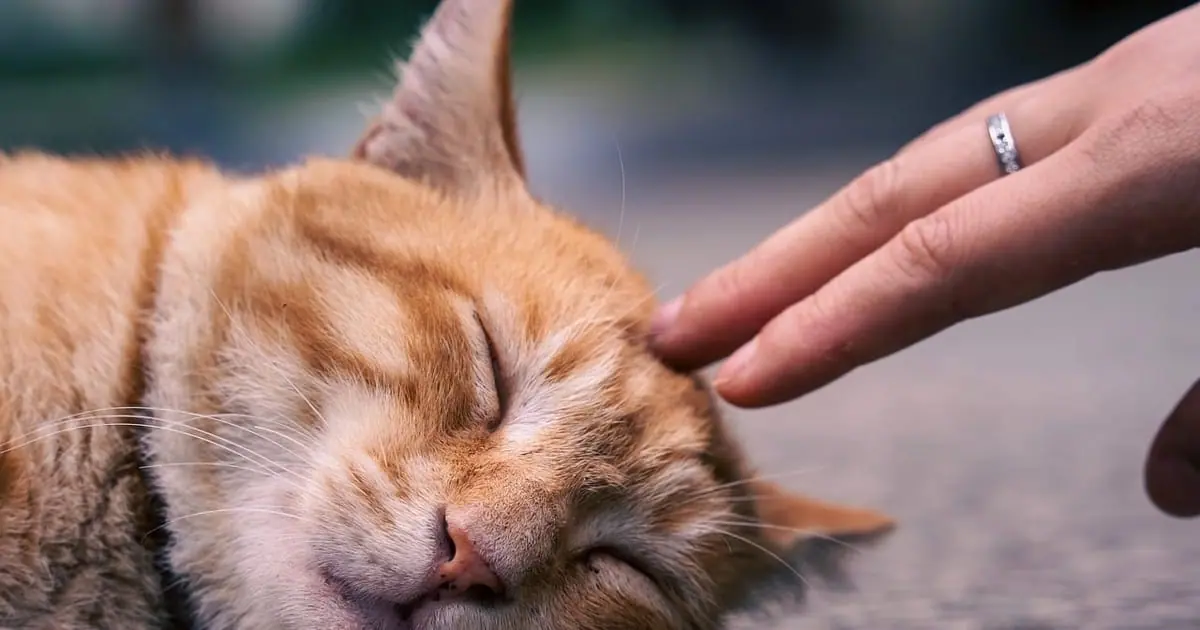
Dr. Barbara Sherman, who directed the behavioral medicine service at NC State's veterinary hospital, put it simply in a 2012 university Q&A: cats are thought to purr "in order to maintain contact with other cats or humans." Below are the contexts in which cats purr, what the newest research says about how the sound is made, and the signs that a purring cat may actually need a vet.
What does it mean when a cat purrs on you?
In most cases, a cat purring on your lap, on your chest or while you stroke it is a relaxed, sociable cat. NC State lists the classic situations: sitting on a person's lap, greeting a familiar cat, being petted, and dozing somewhere warm. The UK charity Cats Protection adds what the body looks like when purring means contentment: relaxed ears and whiskers, small pupils and a calm posture.
Purring during petting can also simply mean the cat is engaged and enjoying the attention. The context is what tells you: a purr from a loose, sleepy cat that keeps coming back for more means something different from a purr from a cat that is crouched and tense (more on that below).
The purr starts with mother and kitten
Purring is one of the first sounds a cat makes. Cats Protection notes that kittens can purr from birth and use it to let their mother know where they are, and NC State points out that both nursing mothers and nursing kittens purr. Because a kitten can purr while it feeds, the sound works as a quiet "I'm here" line between them.
That fits NC State's "maintain contact" explanation: the adult cat purring at you is using the same signal it once used with its mother. If you are raising a young kitten and want to know where it should be developmentally, our kitten age guide walks through the first weeks.
Why does my cat purr when it wants food?
Some purrs are requests. In a study published in Current Biology in July 2009, Karen McComb and colleagues at the University of Sussex recorded cats purring while they tried to get their owners to feed them, and compared those purrs with purrs recorded in other situations. The "solicitation purrs" contained an unusual high-frequency element, which McComb described as "reminiscent of a cry or meow", embedded in the normal low-pitched purr.
When people listened to the recordings, they rated the food-seeking purrs as more urgent and less pleasant, even if they had never owned a cat. When the researchers digitally removed the cry element and left everything else the same, the urgency ratings dropped. McComb suggested cats probably learn to exaggerate this cry when it works, and that it is "more acceptable to humans than overt meowing, which is likely to get cats ejected from the bedroom."
So if your cat purrs loudly next to the food bowl at 5 a.m., that is not just contentment. It is a well-tuned request.
Do cats purr when they are in pain or dying?
Yes, and this is the part most owners don't expect. NC State notes that cats may purr "when in pain," including during emergency veterinary treatment, and that purring can also happen just before sleep. Cats Protection says purring can be a sign that a cat is in pain, and that a cat purring with flattened or sideways ears and wide eyes may be stressed rather than happy. VCA Animal Hospitals lists "purring at times you would not normally expect it" among the vocal signs of pain in cats.
Why would a hurting cat purr? Nobody has proven the reason. The common explanation is self-soothing, a way to calm itself, in the same way the purr calms a kitten. That is why purring in a cat that is very ill or near the end of life is not proof that it is comfortable.
How do cats purr? The 2023 discovery
For about half a century the standard explanation was that the brain sends a rhythmic signal to the muscles of the larynx (voice box), which twitch about 25 times a second as the cat breathes in and out. NC State's 2012 explainer describes it that way: purring "is triggered by a signal from the central nervous system."
In October 2023, a team led by voice scientist Christian T. Herbst at the University of Vienna published a different picture in Current Biology. Working with larynges removed from domestic cats (not from living animals), they showed that low purring-range sounds of about 20 to 30 Hz could be produced just by blowing air through the larynx, "in the absence of muscular contraction or neural input." The likely reason is a pad of connective tissue inside the cat's vocal folds that makes them heavy enough to vibrate that slowly. The researchers compared the result to the "vocal fry" or creaky voice humans can make.
The authors were careful to say this is not "an outright falsification" of the older theory. A living cat still decides when to purr, and the brain and muscles probably still shape the sound. What changed is the idea that every single vibration needs its own muscle twitch.
Is a cat's purr really healing?
You will often read that purring "heals bones." Here is what is actually known. Bioacoustics researcher Elizabeth von Muggenthaler recorded purrs from several cat species (including domestic cats, servals, ocelots, cheetahs and pumas) and, in a 2001 abstract for the Acoustical Society of America, reported dominant purr frequencies mostly in the 20 to 50 Hz range. She proposed that because similar low frequencies are used in some vibration therapies for bone and tissue, purring might help cats heal themselves.
That remains a hypothesis. Cats Protection words it as "suspected." We found no study showing that purring speeds healing in cats, and no evidence that a cat's purr heals people. It is a nice idea, not a fact.
Purr signals at a glance
| Situation | What else you see | Most likely meaning |
|---|---|---|
| On your lap, being stroked | Small pupils, relaxed ears and whiskers, loose body | Content, seeking contact |
| Near the food bowl or your bed at mealtime | Following you, a purr with a more urgent, "whiny" edge | Request (solicitation purr) |
| At the vet, or in a new place | Ears flat or sideways, wide eyes, tense body | Stress, self-soothing |
| A cat that rarely purrs suddenly purrs a lot | Hiding, eating less, hunched posture | Possible pain or illness |
| Mother cat with kittens | Nursing | Contact and reassurance |
Can big cats purr?
Some can. NC State notes that pumas, cheetahs and ocelots purr, while the big roaring cats (lions, jaguars and leopards) do not purr the way a house cat does. Purring is a family trait of cats, which is part of why it has been studied so closely.
When to call your vet
Purring on its own is never a reason to worry. Purring together with other changes can be. Cats hide pain well, so VCA and Cats Protection both point to changes in behavior. Call your vet if your cat is purring and also:
- hides more than usual or avoids being touched;
- eats or drinks less, or stops grooming (or overgrooms one spot);
- sits hunched, squints, or holds its whiskers straight forward with a tense face;
- is reluctant to jump, limps, or has trouble using the litter box;
- is a cat that normally doesn't purr and has suddenly started.
Vets use a tool called the Feline Grimace Scale, published in Scientific Reports in 2019 by Marina Evangelista and colleagues at the Université de Montréal, to score pain from five facial features: ear position, orbital tightening (squinting), muzzle tension, whisker change and head position. You don't need to score your cat yourself, but noticing a tight, squinting face and a low head is a good reason to call. This page is general information and not veterinary advice; your vet is the right person to judge a sick cat.
Sources
- NC State College of Veterinary Medicine, "Why Do Cats Purr?" with Dr. Barbara Sherman, July 30, 2012.
- Cats Protection (UK), "Why does my cat purr?"
- McComb K, Taylor AM, Wilson C, Charlton BD. "The cry embedded within the purr." Current Biology, July 14, 2009; summary: ScienceDaily, University of Sussex release.
- Herbst CT et al. "Domestic cat larynges can produce purring frequencies without neural input." Current Biology, October 3, 2023. doi:10.1016/j.cub.2023.09.014
- von Muggenthaler E. "The felid purr: A healing mechanism?" Journal of the Acoustical Society of America 110(5), 2001 (conference abstract).
- VCA Animal Hospitals, Weir M, Downing R, "Signs of Pain in Cats".
- Evangelista MC et al. "Facial expressions of pain in cats: the development and validation of a Feline Grimace Scale." Scientific Reports, December 2019.